A different approach to targeting cancer drivers
Investigating how interrupting protein synthesis can affect the proteins cancer cells depend on.


Where SVC112 acts

- Process direction
- Inhibition
Both initiation routes lead to translation elongation, when the ribosome extends a growing protein. SVC112 inhibits this shared step.
Adapted from Su, 2025, Figure 14.3. SVC112 mechanism: Gomes et al., 2025.
Why protein synthesis?
Cells continually make and replace proteins. Some proteins that support cancer-cell growth and survival are short-lived and need to be replenished. This creates a research question: can interrupting their production affect the ability of cancer cells to survive?
SuviCa’s research focuses on translation elongation, the step during which a ribosome builds a protein by extending its amino-acid chain. Rather than studying a single cancer-driving protein in isolation, our approach examines the effects of interrupting a process that produces many proteins.
The SVC112 approach
SVC112 is an investigational small molecule derived from bouvardin, a compound identified through a whole-animal screening approach. Published research describes SVC112 as an inhibitor of translation elongation, preventing the normal cycle in which elongation factor 2 (eEF2) dissociates from the ribosome.
In preclinical models, SVC112 can reduce levels of short-lived proteins, including MYC and MCL-1, that contribute to cancer-cell growth or survival. These findings provide a basis for investigating translation elongation as a therapeutic strategy.
From research to development
SuviCa is developing two programs based on SVC112: one focused on solid tumors and one on blood cancers. The programs involve different formulations of the same molecule. First patient dosing for the solid-tumor program is planned for 2027.
Preclinical findings guide development, but studies in people will be needed to evaluate safety and potential clinical benefit. SVC112 remains investigational.
Studying tumor growth and regrowth
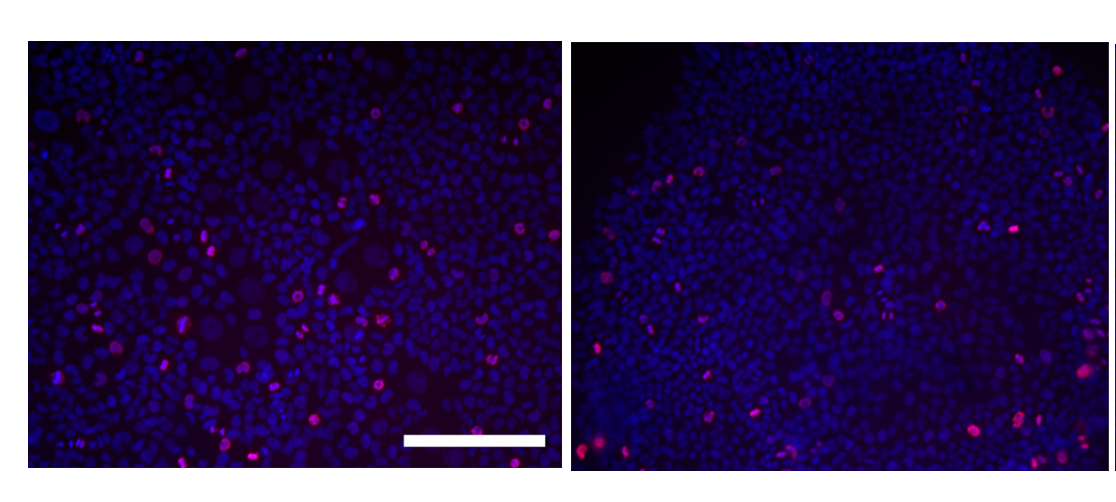
A 2020 study examined SVC112 in head and neck cancer cells, tumor spheres, and patient-derived tumors grown in mice. The researchers studied proteins associated with cancer stem cells, including MYC and SOX2, and tested SVC112 alone and with radiation.
Responses differed between models: some tumors showed growth inhibition or regression, while one tested model remained resistant. These results support further investigation into how translation elongation influences tumor regrowth.
Understanding sensitivity and resistance
A 2025 study evaluated responses across 40 cancer cell lines representing acute myeloid leukemia, multiple myeloma, colorectal cancer, and head and neck squamous cell carcinoma. Responses varied substantially between models. This variation is central to understanding where the approach may be most useful.
The study also explored factors associated with sensitivity and resistance. In acute myeloid leukemia models, the balance between BCL-XL and MCL-1 was associated with response; in colorectal cancer models, MYC stability was implicated. These are preclinical findings that inform further investigation, rather than established tools for selecting patients.
A foundation in drug discovery
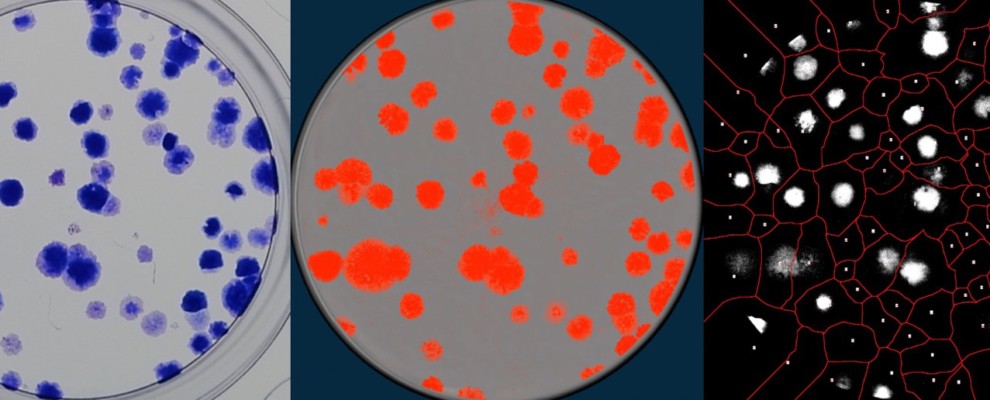
SuviCa’s research also includes methods for studying cancer-cell regrowth. A clonogenic assay follows the ability of individual cells to grow into colonies, providing a way to investigate responses to radiation and other treatments over time.
A 2023 paper describes an automated screening system that combines cell handling, irradiation, and colony counting. The researchers identified 13 cell lines suitable for smaller assay formats and ran pilot screens in two lines using a library of 1,584 compounds. Selected findings were tested in conventional clonogenic assays.